What can we
help you find?
Ricerche suggerite

MULAB, Memorandum of Understanding Approved: Palazzina Piacenza Will Host the Biella Textile Museum
On the morning of 3 December, the Biella City Council approved the memorandum of understanding to be signed by the Municipality, the Biella Industrial Union, Fondazione Pistoletto and Fondazione Cassa di Risparmio di Biella for the creation of the new Laboratory-Cultural Museum for Biella’s Textile Heritage. “We are pleased with the alliance,” said Paolo Naldini, director of Cittadellarte, “which has come together around this important project for our territory.”
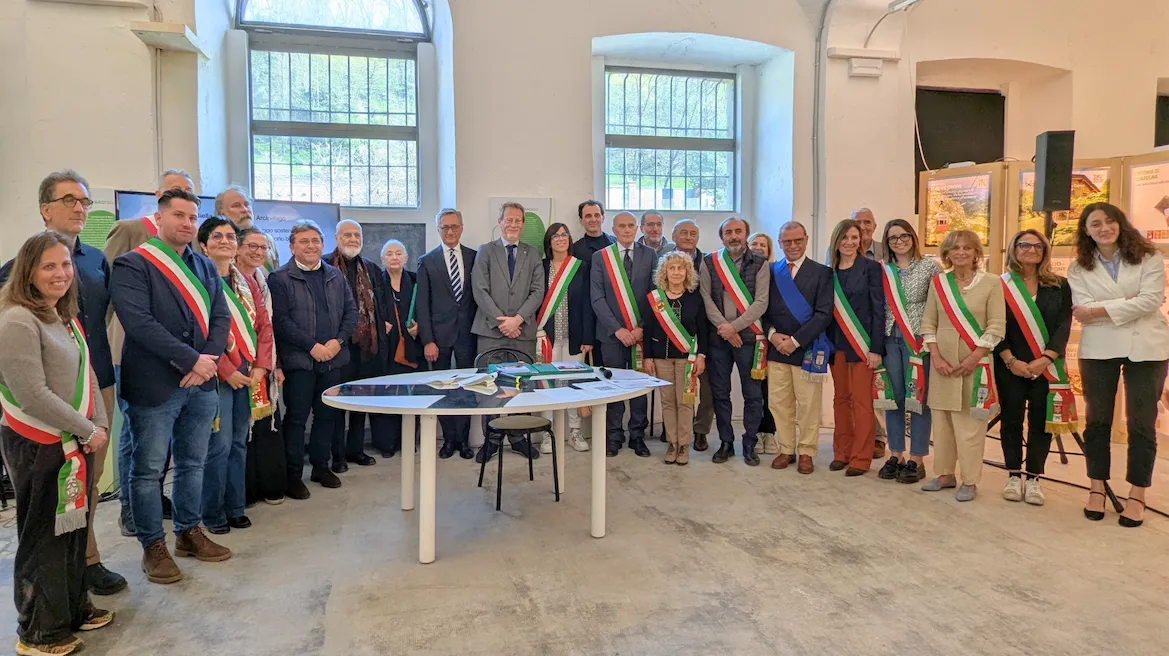
Yesterday marked a significant step forward for the future of MULAB: during a press conference, the City Council announced the approval of the memorandum of understanding to be signed by the Municipality of Biella, the Biella Industrial Union, Fondazione Pistoletto ONLUS and Fondazione Cassa di Risparmio di Biella for the implementation of the new project of the Laboratory-Cultural Museum for Biella’s Textile Heritage. The project stems from the Ministerial Decree of 8 August 2022, issued by what was then the Ministry of Economic Development - now the Ministry of Enterprises and Made in Italy (MIMIT) - secured thanks to the support of MP Roberto Pella.
“The agreement,” reads the official statement, “formalises a variation of the original project submitted to MIMIT, with the aim of developing a broad and shared plan involving all stakeholders. The memorandum, now submitted to the Ministry for final approval of the project changes, defines the new location of MULAB in Palazzina Piacenza in Piazza Alessandro Lamarmora, a historic building inaugurated in 1911 as the ‘Felice Piacenza’ Wool Mill School, now owned by the Municipality.” The children’s library and its services, previously housed inside Palazzina Piacenza, will be moved to new spaces in the former Civic Library on Via Pietro Micca.
The network
As reported on the Municipality’s website, “the project is extensive and took shape over a year of fruitful collaboration among local partners: the City of Biella will provide Palazzina Piacenza and oversee the redevelopment of the building with a total investment of €1.5 million, entirely funded by ministerial resources transferred by Fondazione Pistoletto ONLUS.” Cittadellarte will be responsible for designing the concept and installations and, together with the other partners, defining the future management of the museum. The redevelopment of Palazzina Piacenza includes spaces for permanent installations, temporary exhibitions, workshops, and cultural events. The choice of this new site for MULAB will make it possible to integrate the project with the Museo del Territorio Biellese and with the State Archive, creating a unique cultural hub capable of engaging citizens, schools, businesses and scholars. “This hub, at the centre of a distributed system narrating the history of Biella’s textile tradition,” the statement highlights, “will be supported by strong institutions such as Cittadellarte, Fondazione Sella, Archivio Pria, Fabbrica della Ruota, and the archives of Biella-based companies.” In line with the ministerial programme for enhancing textile cultural heritage, MULAB represents a strategic investment for the territory. The project strengthens Biella’s role as a UNESCO Creative City, connecting institutions, archives, museums and businesses across the district and offering new spaces for education, outreach and design—thus enhancing a cultural legacy shared by the entire community. The first inaugural exhibition, expected by 2027, will officially launch the new hub.
Words from the Mayor and Deputy Mayor
“The creation of MULAB,” stated Mayor Marzio Olivero and Deputy Mayor and Councillor for Culture Sara Gentile, “is a fundamental step in building a nationally recognised cultural centre dedicated to the history and future of Biella’s textile sector. With the redevelopment of Palazzina Piacenza, we restore to the city a place rich in memory and transform it into an open and inclusive laboratory, projected towards the future through innovation. This is not only about making use of the two million euros allocated to our territory by the Government, but about presenting a serious project in synergy with our partners, whom we sincerely thank for the collaborative spirit that has guided a year of intense meetings and working groups. The coherence with the industrial history of the territory and the strategic location at the heart of the city make Palazzina Piacenza the ideal site for a space dedicated to enhancing Biella’s textile culture. This location represents a renewed complementarity between the structures of the Chiostro di San Sebastiano and the Palazzina: the integration between the Museo del Territorio Biellese - also undergoing restoration - and the renovated Palazzina Piacenza will make it possible to showcase the city’s historical and artistic heritage through exhibitions, events and educational activities, supporting widespread public engagement and fostering further cultural tourism. The former ‘Felice Piacenza’ Wool Mill School is an ideal architectural structure, rich in meaning, steeped in history, and full of stories tied to Biella’s cultural identity. It is a building with enormous potential to interconnect past, present and future, embodying what the culture of the factory, the vision of entrepreneurs and the craftsmanship of workers have represented - and continue to represent - for Biella’s textile creativity. Consider the title of UNESCO Creative City, obtained in 2019 thanks to a collective candidacy capable of uniting different visions, energies and skills. This shared spirit - fuelled today by key players such as Fondazione Pistoletto, the Biella Industrial Union and Fondazione Cassa di Risparmio di Biella - continues to guide us. We express our sincere gratitude to them: without this collaboration and mutual trust, projects like MULAB could neither take shape nor aspire to become an open, sustainable and vibrant heritage for the entire community.”
The voice of the Director of Cittadellarte
“We are pleased with the alliance,” said Paolo Naldini, “that has come together around this important project for our territory. A ‘museum for textiles’ is an expression that unites industrial and productive vocation with cultural value and enhancement: these are two paths that can significantly contribute to a prosperous and even brilliant future. Cittadellarte is fully committed to this direction, and harmony with civic, economic and social components can only strengthen our conviction. We continue to move forward,” he concluded, “driven by a mission of social utility for the common good.”