What can we
help you find?
Ricerche suggerite
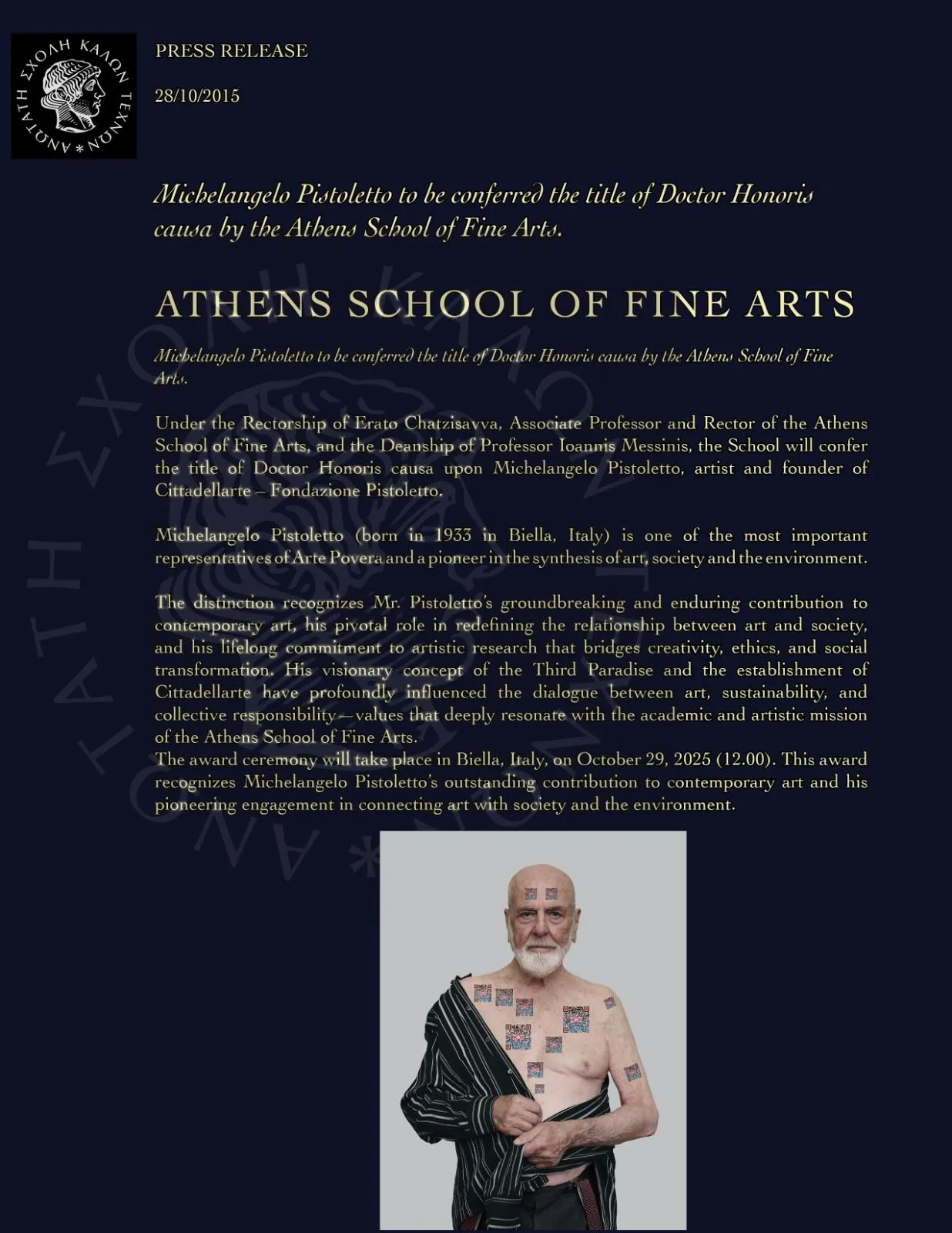
Michelangelo Pistoletto named "Doctor Honoris Causa" by the Athens School of Fine Arts
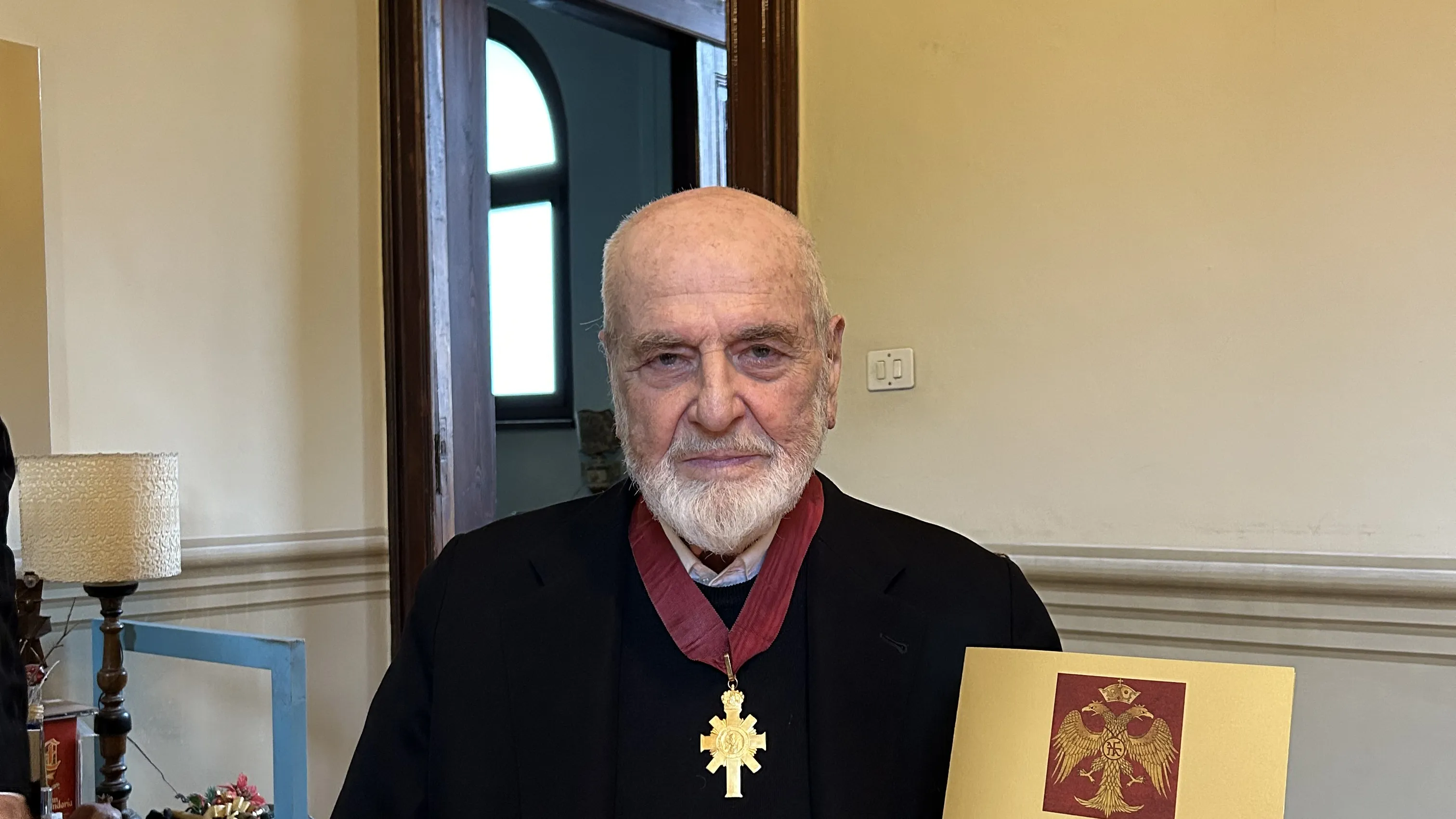
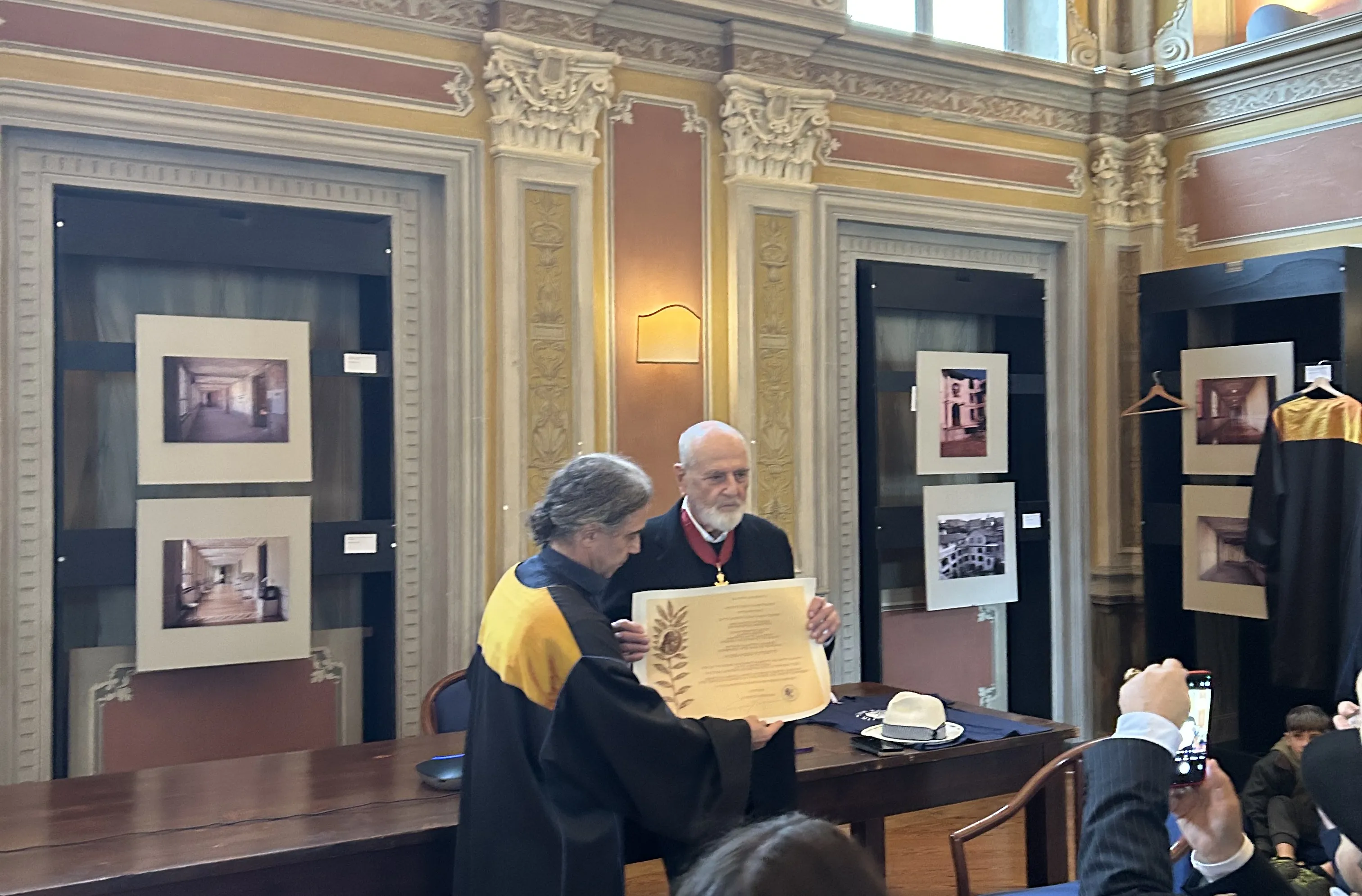
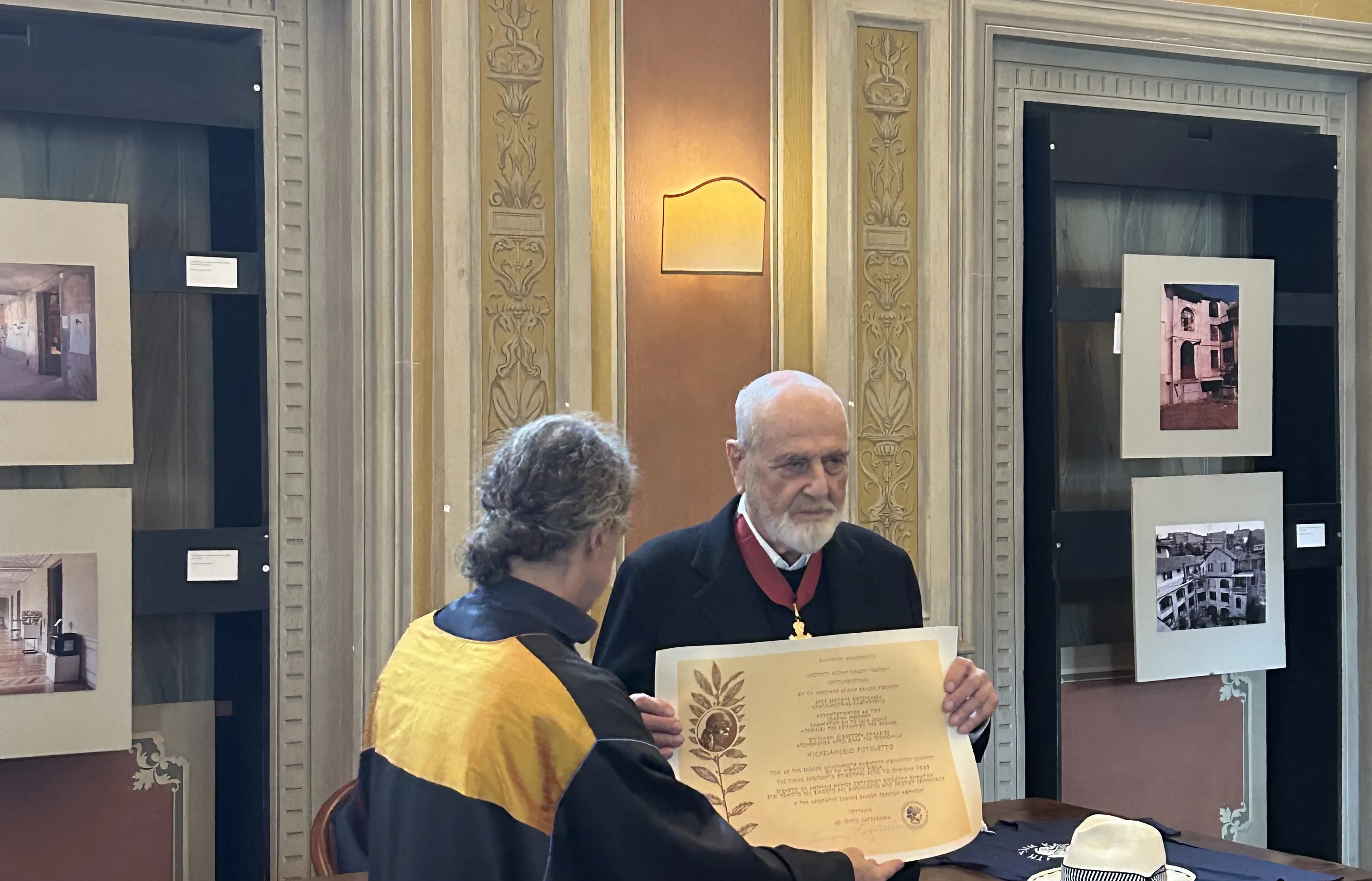
On October 29th, at the Pistoletto Foundation, the Athens School of Fine Arts awarded the master of Arte Povera its highest academic honor: the title of "Doctor Honoris Causa." It is not just an award, but a symbolic dialogue between ancient Greece and Cittadellarte's contemporary vision, which unites art, thought, and global responsibility under the banner of the Third Paradise.
Yesterday, the stately halls hosted a gathering of extraordinary symbolic value: the ceremony in which the Athens School of Fine Arts (ASFA) awarded Michelangelo Pistoletto the title of Doctor Honoris Causa.
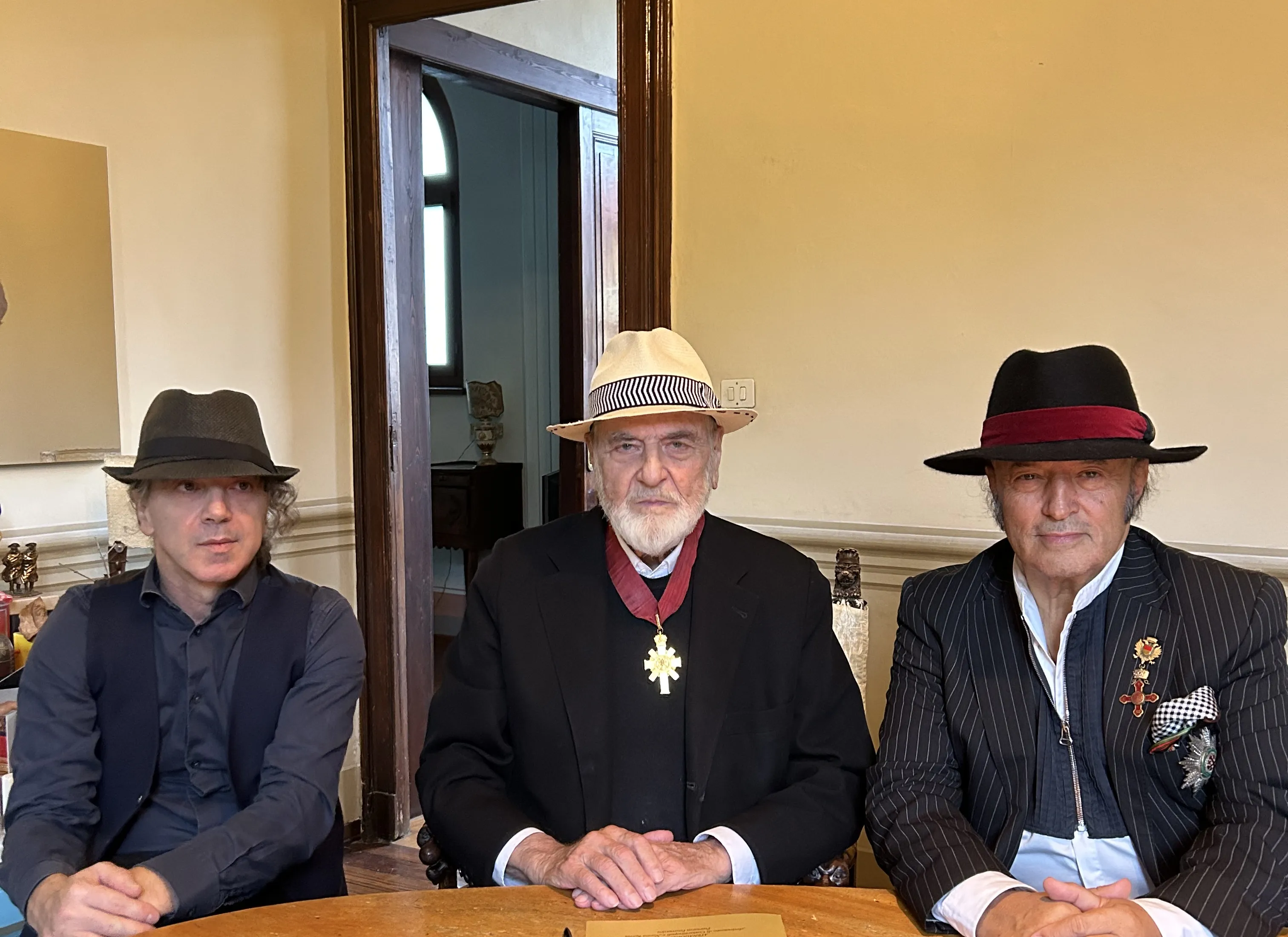
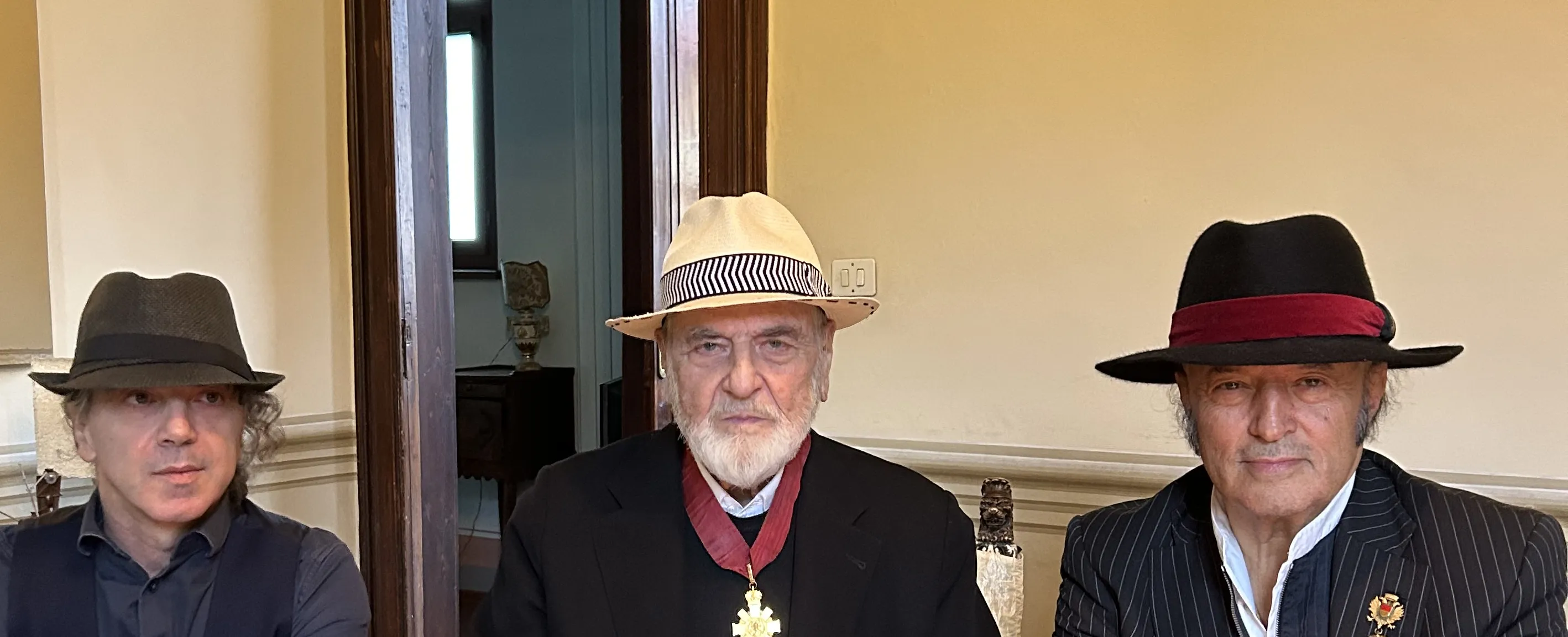
In Biella, Ioannis Messinis, professor at the Athens Academy of Fine Arts, and Kantzas Ioannis, Consul General of Greece, came to pay homage to the artist. Their presence went beyond a formal gesture, a concrete sign of esteem for a master who transformed art into a civic and collective commitment. Rector Erato Chatzisavva, meanwhile, attended the ceremony remotely.
Founded in 1837, the ASFA is the oldest art academy in Greece and one of the most prestigious in Europe. Born from the desire to renew classical tradition through experimentation, today its Doctor Honoris Causa is awarded only to figures who have left an indelible mark on the progress of art and culture. Among its recipients are Yiannis Kounellis, Alexander Nehamas, and Wieland Schmied. Indeed, with this title, the School of Athens recognizes Pistoletto's pioneering contribution, particularly his relentless pursuit of a new relationship between art, society, and the environment.
The official nomination document is clear: it rewards "a constant commitment to connecting artistic creation with social transformation, through the vision of the Third Paradise and the founding of Cittadellarte." It is the consecration of an art that transcends the gallery, but becomes a driver of ethical and social change.
In his acceptance speech, Pistoletto offered a reflection that was both intimate and universal, intertwining history and the future. “This morning, I feel like I have fully immersed myself in ancient Greece. This idea of an art that, across space and time, leads to a good that extends throughout society through human intelligence… returning to see the past is crucial, because it is from the past that we must draw the consequences for what tomorrow will be.”
He then recalled the famous metaphor of the mirror painting, not only as a work of art, but as a symbol of a continuous exchange between the visible and the invisible, between past and future. His final appeal is a moral imperative, linked to the symbol of the Third Paradise: “In the central circle of the Third Paradise, instead of making war, we must make peace. Only the best use of creation can create peace. Art is the primary essence of creation, and it must guide the new society.”
The ceremony concluded in an atmosphere of profound emotion and with the awareness of having celebrated an ideal continuity between cultures. Greece, the cradle of philosophy and democracy, and Italy, the land of the Renaissance, met in Biella in a gesture that speaks of collaboration, exchange, and a shared future.
With the awarding of this title, the Athens School of Fine Arts not only recognizes the international scope of Pistoletto's work, but also reiterates its crucial message: art as a space for peace, knowledge, and responsibility. An echo that, from Cittadellarte, continues to resonate powerfully around the world.