What can we
help you find?
Ricerche suggerite

The Right to Food Is Built Together: "Good Food for All" at Terra Madre
In Turin, on the occasion of the Salone del Gusto held during the last weekend of September, a discussion unfolded between law, agriculture, public policies, education, and art, which relaunched the European Citizens' Initiative for a healthy, fair, and sustainable diet. Cittadellarte invited and invites everyone to transform this vision into participation: sign and get people to sign.
What does it mean to recognize food as a right? It means asking who can access it, how it is produced, what working conditions it makes possible, and what consequences it generates on local territories. It means keeping together the dignity of people and the health of the planet. From these considerations, on September 26 in Turin, within the framework of Terra Madre Salone del Gusto 2026, the meeting "Good Food for All: mobilizing Europe for sustainable and accessible food" took place as part of the program "Feeding the cities of the world."
Moderated by Francesco Saverio Teruzzi, from Fondazione Pistoletto Cittadellarte and member of the Steering Committee of the Good Food for All coalition, the discussion woven together different experiences and expertise around a shared goal: making the right to food a daily reality, through community choices and institutional accountability. Teruzzi reconstructed the journey that led to the European Citizens' Initiative (ECI) Food is a Human Right for All! Guaranteeing healthy, just and sustainable food systems. A journey launched in 2023 around the Refettorio in Geneva, founded by chef Walter El Nagar: a place where catering meets solidarity and the same food served during the day is offered, in the evening, to people who could not afford it, in collaboration with local associations. A concrete experience from which a political question arises: how can we extend access to quality food to everyone?

The ECI brings this question to the European level. The objective is to collect one million valid statements of support, reaching the required thresholds in at least seven Member States, by January 7, 2027. The event in Turin took place on the eve of the last one hundred days of mobilization: a decisive phase to broaden participation and give strength to the demand for change.
Let us discover what emerged from the meeting through the voices of the speakers:
Tiziana Favi, chef and owner of Namo Ristobottega in Tarquinia, cook of the Alliance and international councillor of Slow Food, brought the debate back to the relationship between those who produce and those who sit at the table. Food quality must include its accessibility: "good, clean and fair" finds its full meaning when it can be for everyone. Guarding the land, recognizing the work of producers, and making conscious choices are actions through which people can contribute to changing the rules of the food system.

Tomaso Ferrando, Faculty of Law at the University of Antwerp, illustrated the gap between the recognition of the right to food and its effective implementation. Recalling the Universal Declaration of Human Rights and the International Covenant on Economic, Social and Cultural Rights, he reminded that the demand addressed to institutions concerns the implementation of an already recognized right. A right that begins on the plate and spans work, land, water, biodiversity, and climate: even the conditions under which food is produced are part of its realization.

Veronica Allegretti, researcher at the University of Turin, examined in depth the consequences of food poverty. The inability to access adequate food compromises freedom of choice, generates insecurity, and limits opportunities for social interaction. Eating also means sharing, recognizing one another, and participating in social life. The contribution of associations and volunteering is essential, but it must be accompanied by structural policies capable of addressing the root causes of poverty.

Lorenzo Bairati, associate professor of Comparative Private Law at the University of Gastronomic Sciences in Pollenzo, addressed the relationship between the right to food, the market, and European regulation. In a broadly regulated sector, it is necessary to make this right a concrete benchmark for food policies. The ECI offers a tool for participation, complemented by daily practices through which everyone exercises their citizenship: cooking, farming, transmitting knowledge, and choosing how to purchase.

With Riccardo Giovanni Bruno, researcher at the University of Turin and expert in food policy, the perspective shifted to local territories. Food policies allow for addressing the food system as a whole, including surpluses, waste, and decision-making participation. The experience of the Food Atlas of Metropolitan Turin shows the value of collaboration between research and institutions; exchange among cities can help build answers to shared problems.

Paola Zanini, from the Education Department of the Castello di Rivoli Museum of Contemporary Art, shared how art and food can create spaces for encounter. From the "Tappeto Volante" project to the Festival of Light and White, up to the experiences at Gruppo Abele's Fabbrica delle "e", the table becomes a place where different cultures recognize each other. In this journey enters also the sign-symbol of the Third Paradise by Michelangelo Pistoletto: art becomes shared practice, education, and community building.

Davide Tocchetto, agronomist and lecturer at the Domenico Sartor Agricultural Institute in Castelfranco Veneto, brought the experience of agricultural education. Aquaponics projects, which integrate fish farming and plant cultivation by reusing water, directly involve students in experimentation. International collaborations and the dialogue with art show a school capable of producing and sharing knowledge, training those who will have to take care of food and the resources on which it depends.

The thread uniting these contributions also concerns the work of Cittadellarte: art as a tool for a responsible transformation of society. In Turin, this perspective met law, research, cuisine, and agriculture, placing at the center the possibility of acting together.
In conclusion, Teruzzi renewed the commitment of the coalition: "we do not give up". Good Food for All looks beyond the collection of signatures, but today that collection requires immediate action.
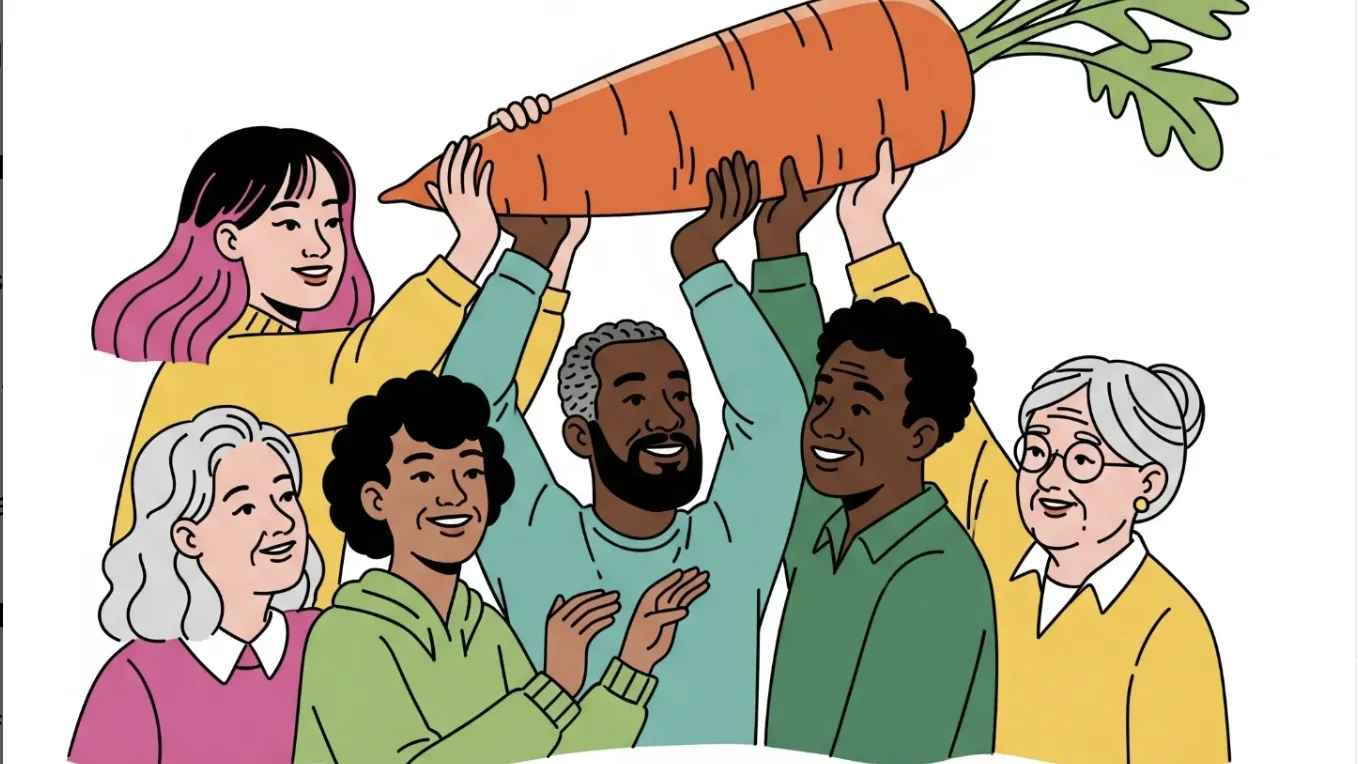
Signing is the first step. Getting people to sign is the step that can multiply its strength. Sharing the link, talking about it with friends and colleagues, involving associations, schools, and professional networks means turning a conviction into concrete participation. Every signature contributes to the goal; every person involved can open a new network of support.
The right to food also needs our voice. Let's sign the ECI and get others to sign it: let's bring this demand from our tables to the European institutions.
To sign: www.goodfoodforall.eu or access the official signature collection directly.